

HeartLung AI Welcomes CMS Coverage for AI-Enabled Opportunistic Coronary Artery Calcium (CAC) Detection on Chest CT
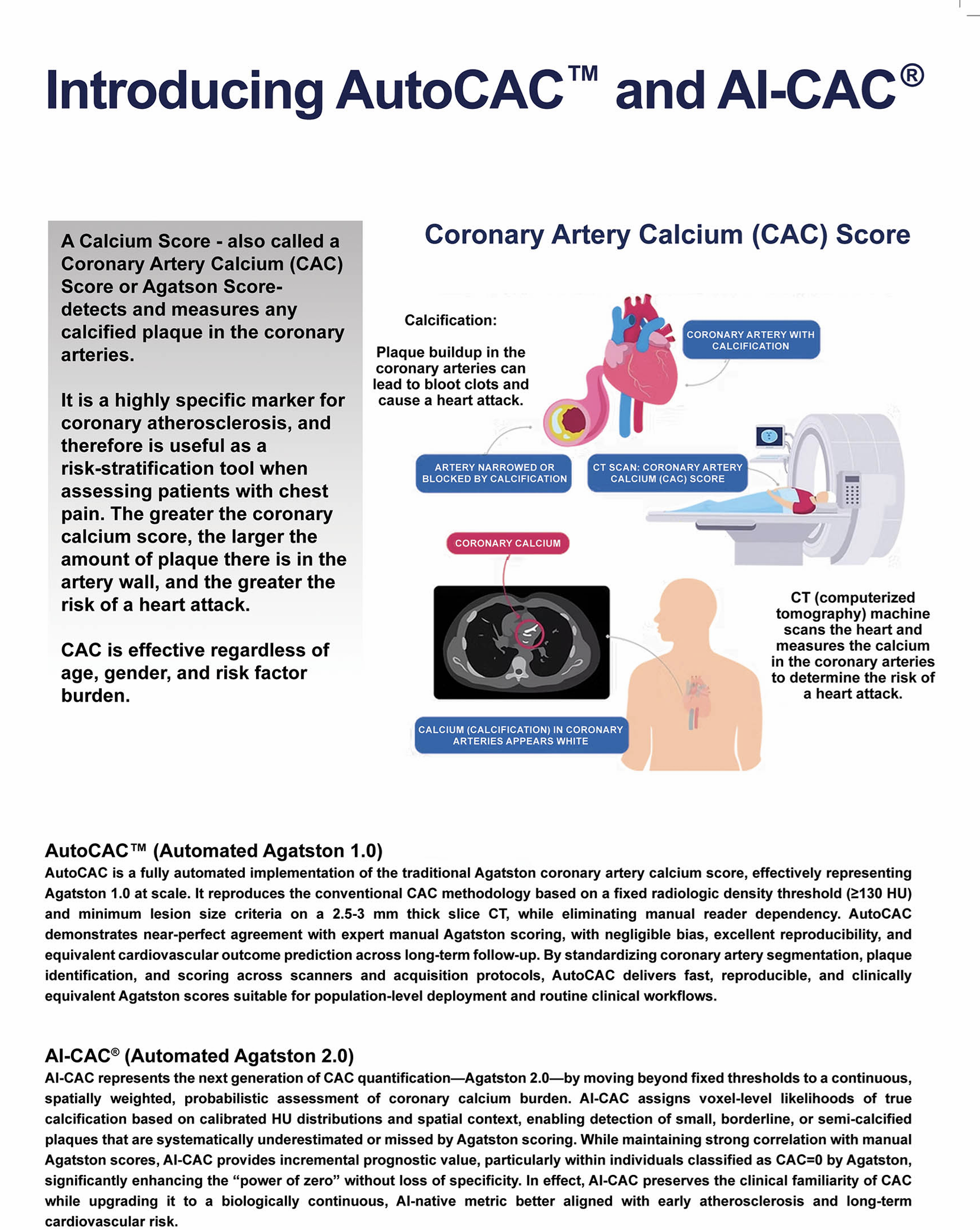
AutoCAC and AI-CAC by HeartLung
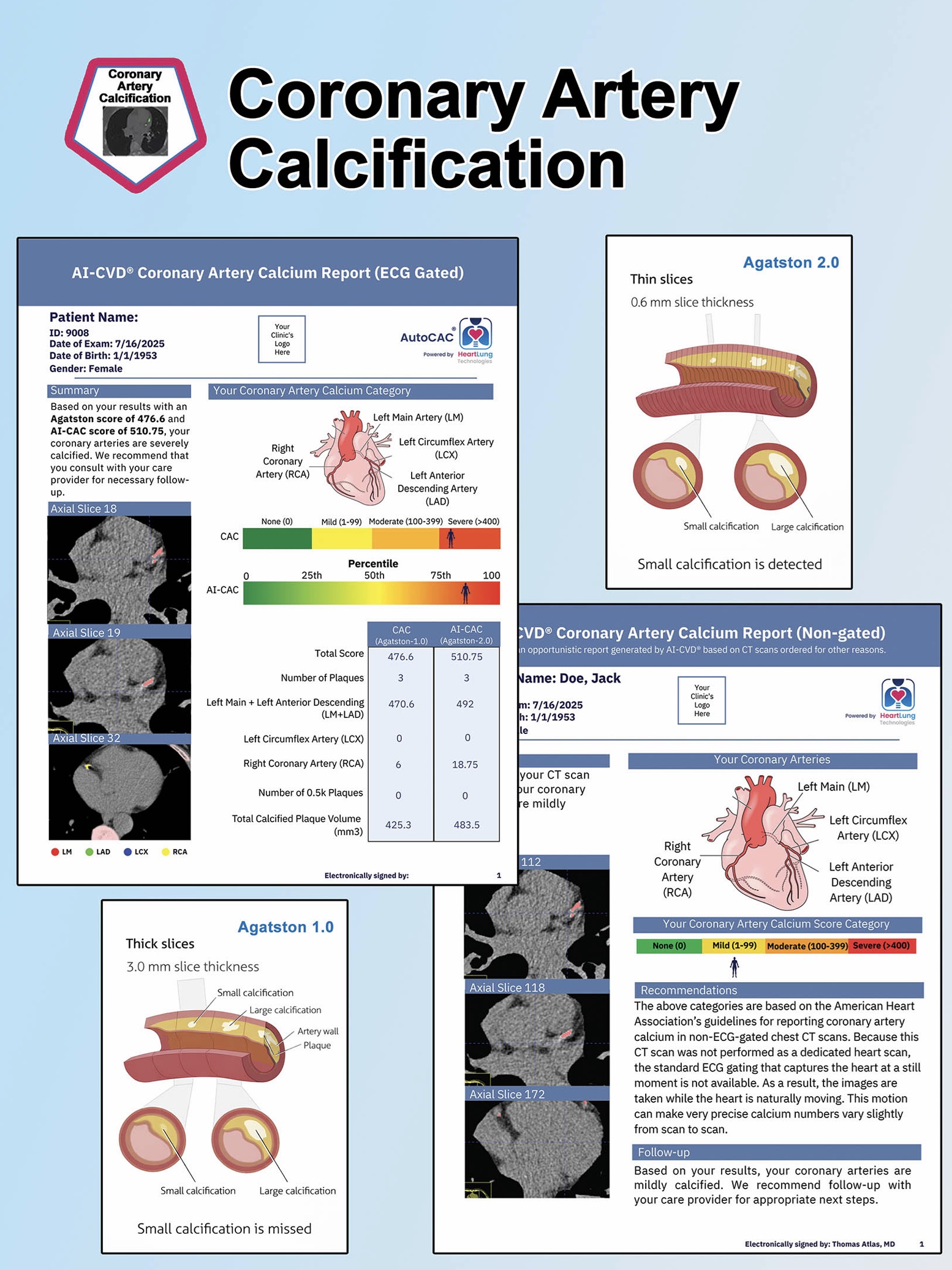
AutoCAC and AI-CAC by HeartLung
“Covering opportunistic detection of coronary artery calcium is a major step in the right direction,” said Dr. Morteza Naghavi, Founder and President of HeartLung Corporation. “Too many patients with silent coronary artery disease are already in the healthcare system, undergoing CT for non-cardiovascular reasons, yet leave without the cardiovascular information hiding in plain sight. Recognizing algorithmic CAC analysis is a practical, scalable way to identify unrecognized disease earlier and intervene before costly, late-stage adverse outcomes occur.”
This CMS action is consistent with the broader direction of cardiovascular prevention. The 2026 ACC/AHA dyslipidemia guideline elevated the role of CAC in refining cardiovascular risk assessment, while the American Heart Association’s 2025 scientific statement specifically described opportunistic detection of CAC on non-cardiac chest CT as an emerging tool for cardiovascular disease prevention and noted that adoption has remained limited despite more than 17 million eligible individuals in the United States.
For HeartLung AI, this policy milestone reinforces the direction behind AI-CAC, AutoCAC, and the broader AI-CVD platform: using artificial intelligence to turn already-acquired CT scans into actionable preventive insight. HeartLung’s FDA-cleared AI-CVD platform is designed to automatically extract opportunistic measurements from existing chest and abdominal CT scans, including CAC scoring and aortic valve calcium, without additional imaging, radiation, contrast, or workflow disruption.
“Detecting and diagnosing additional finding on CT scans with AI needs to move beyond the research domain and enter mainstream clinical care,” said David Yankelevitz, MD, Professor of Radiology, Icahn School of Medicine at Mount Sinai, and Co-Principal Investigator of IELCAP. “When the evidence is mature as for coronary calcium scoring, it should be embedded into everyday care, quietly and consistently leading to clinically meaningful findings from scans that are already being performed. That is how screening scales. That is how earlier prevention becomes real. And that is how lives are saved.”
While G0680 specifically addresses algorithmic analysis of CAC and/or aortic valve calcification from chest CT in the outpatient payment framework, HeartLung AI believes this decision should accelerate broader adoption of opportunistic AI screening and strengthen the case for future reimbursement pathways, including dedicated CAC scanning for appropriately selected patients. The healthcare system should be moving toward earlier, simpler, more automated identification of risk before symptoms, admissions, and avoidable downstream costs.
About HeartLung Technologies
HeartLung Technologies is a pioneer in AI-driven preventive imaging, focused on early detection of cardiovascular disease, lung cancer, COPD, osteoporosis, fatty liver disease, and other conditions detectable on CT scans. Its flagship platform, AI-CVD, transforms routine CT imaging into a scalable platform for comprehensive cardiovascular risk assessment and prevention.
About AI-CVD
AI-CVD is an FDA-cleared, AI-powered platform that performs fully automated analysis of CT scans to detect and quantify cardiovascular disease. By enabling opportunistic screening across large populations, AI-CVD supports earlier intervention, improved outcomes, and reduced healthcare costs. AI-CVD is uniquely designed to align clinical impact with economic value. By converting routine CT scans into scalable screening opportunities, AI-CVD enables health systems to improve patient care, increase patient engagement, and generate new downstream revenue from preventive cardiology, imaging, and therapeutic interventions, while reducing the burden of advanced (late-stage) cardiovascular disease.
AI-CVD Components
AI-CVD delivers a comprehensive, automated assessment from a single scan, including:
• Coronary artery calcium (AI-CAC®) for atherosclerotic CVD
• Aortic and valvular calcification (TAC/AVC) for valvular disease and stroke
• Cardiac chamber volumetry (AutoChamber®) for heart failure and AF
• Aorta and pulmonary artery sizing for aortic aneurysm and pulmonary hypertension
• Epicardial and visceral fat for cardiometabolic disease
• Liver density for hepatic steatosis leading to CVD
• Lung density (emphysema/COPD/ILA linked to CVD and lung cancer)
• Bone mineral density (bone fracture risk)
AI-CVD Impact
AI-CVD converts routine CT imaging into a scalable prevention platform enabling earlier detection of silent disease, improved outcomes, and new pathways for preventive cardiology. Enterprise projections show that AI-CVD adoption can lead to meaningful reductions in major adverse cardiovascular events (MACE), improved population health outcomes, and substantial financial return over a five-year period through integrated care pathways and earlier intervention
About AI-CAC and AutoCAC:
HeartLung AI’s AutoCAC represents automated Agatston 1.0, delivering fast, reproducible coronary artery calcium scoring aligned with the traditional CAC method at scale, while AI-CAC represents Agatston 2.0, an advanced AI-native approach designed to detect and quantify coronary calcium more sensitively, including earlier and lower-burden disease that may be underestimated by conventional scoring.
Marlon Montes
HeartLung Technologies
+1 310-510-6004
email us here
Visit us on social media:
LinkedIn
X
Legal Disclaimer:
EIN Presswire provides this news content "as is" without warranty of any kind. We do not accept any responsibility or liability for the accuracy, content, images, videos, licenses, completeness, legality, or reliability of the information contained in this article. If you have any complaints or copyright issues related to this article, kindly contact the author above.
